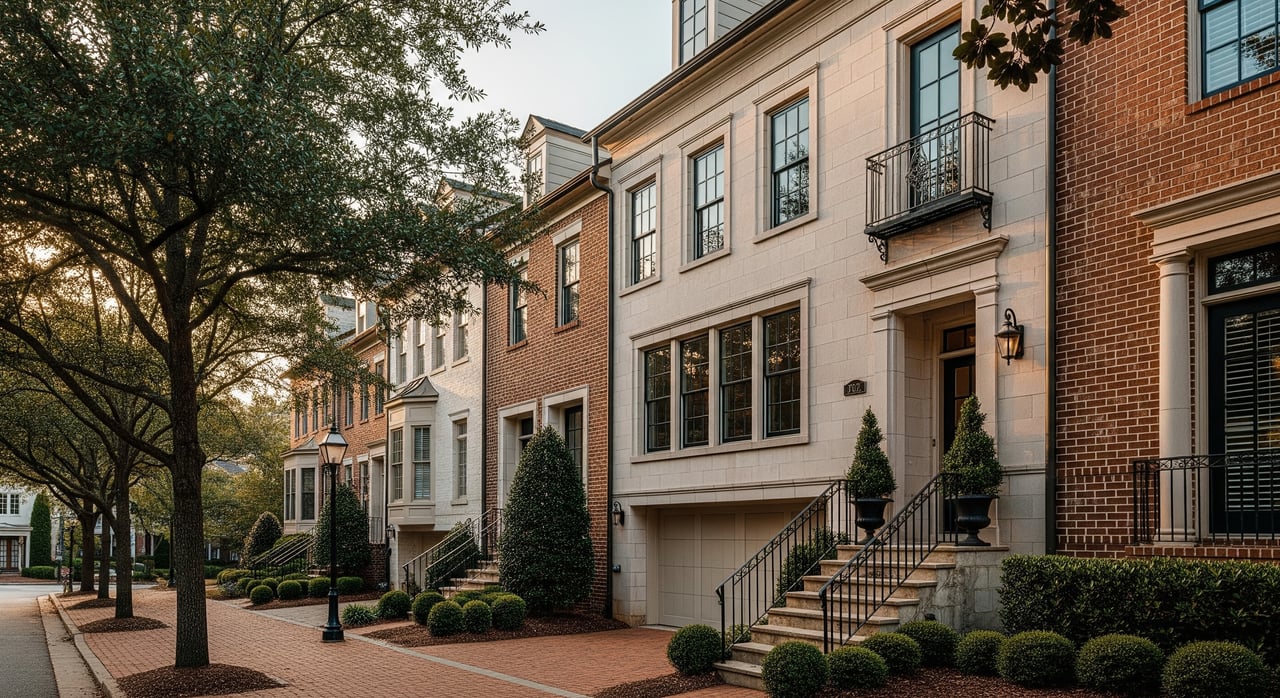
Thinking about buying a townhome in Suwanee and wondering if it will actually perform as an investment? You are not alone. Many buyers want lower-maintenance living that still attracts strong renter and resale demand. The good news is that Suwanee’s Town Center and Greenway create a lifestyle advantage that many suburbs cannot match. In this guide, you will learn what drives demand, how to underwrite costs, which HOA rules matter, and the steps to take before you buy. Let’s dive in.
Why Suwanee townhomes attract renters
Walkability and lifestyle
Townhomes within roughly a half to one mile of Suwanee Town Center and the Suwanee Creek Greenway tend to command more attention from renters. Walkable access to dining, retail, events, and outdoor recreation is a major draw. The city’s investment in parks and programming supports year-round activity, which can help with consistent rentability and future resale.
Commute access and employment
Suwanee gives you suburban living with access to regional job centers. Most tenants commute by car, so proximity to I‑85 and key corridors like GA‑317, Buford Drive, US‑23, and GA‑120 matters. Broader employment growth across the Atlanta metro and Gwinnett County supports long-term renter demand for well-located townhomes.
Who rents or buys here
You are likely to see interest from young professionals, small households, and empty-nester buyers seeking lower-maintenance living. The blend of lifestyle amenities and manageable square footage suits people who want convenience without the overhead of a large yard. If you plan to hold and then resell, this buyer mix can also support your exit.
Schools and quality of life
Local school attendance zones can influence some family renters and future owner-occupiers. Verify attendance zones for any specific address during due diligence. Public events, farmers markets, and park access add to the appeal for a wide range of households and can support both rental and resale demand over time.
Short‑term rental rules
Before counting on short‑term rental income, confirm that local ordinances and your HOA allow it. Many townhome communities restrict short-term rentals or require registration and lodging taxes. Treat strict rules as a limiting factor in your underwriting.
What to underwrite before you buy
Revenue: rents and vacancy
Start with current leased and active rental comps for 2‑ and 3‑bedroom townhomes in the same or adjacent communities. For well-located homes near Town Center, a conservative vacancy assumption in the 5 to 8 percent range is reasonable. For older product or less central locations, increase the vacancy range.
Costs: line‑item budget
Build a realistic operating budget before you write an offer. Use conservative estimates until you verify each item.
- Mortgage: Investor loans usually require higher down payments and carry higher rates than owner‑occupied loans. Confirm terms early.
- Property taxes: Pull the current Gwinnett County tax bill and account for a reassessment after purchase.
- HOA fees: Confirm monthly amount, what is covered, and whether there are pending or recent special assessments.
- Insurance: Get a landlord policy quote and review the HOA’s master policy for coverage gaps. Consider loss assessment coverage.
- Utilities: Clarify which utilities are paid by the owner versus the tenant. Some HOAs include water or trash.
- Maintenance: Underwrite 5 to 10 percent of effective gross income for routine items. For turnovers, budget 2,000 to 5,000 dollars or set aside 3 to 5 percent of rent for reserves.
- Property management: If you will not self‑manage, plan for 8 to 12 percent of collected rent plus leasing fees.
- Vacancy and credit loss: Use 5 to 10 percent based on location and product.
- Licensing and taxes: If you plan short‑term rentals, include lodging taxes and any required registrations.
HOA rules that make or break returns
HOAs are central to townhome investing. Read everything.
- Rental caps: If the association limits how many units can be rented, your ability to lease now or on resale can be restricted.
- Short‑term rental limits: Many communities prohibit STRs or set rules that make them impractical.
- Special assessments: Underfunded reserves lead to surprise costs. Ask for recent budgets, reserve studies, and meeting minutes.
- Insurance gaps: Understand deductibles, exclusions, and what the master policy covers. Shared structures can add complexity.
- Parking and pet policies: These rules affect tenant appeal and may influence rent and turnover.
A simple underwriting framework
Anchor your decision in a clear set of metrics. Run at least two financing scenarios and stress test your assumptions.
- Gross Scheduled Income: Market rent times 12.
- Effective Gross Income: Gross Scheduled Income minus vacancy and collection loss.
- Net Operating Income: EGI minus operating expenses, excluding mortgage.
- Cap Rate: NOI divided by purchase price. Use it to compare similar local assets.
- Cash‑on‑Cash Return: NOI minus debt service, divided by total cash invested.
- DSCR: NOI divided by annual debt service. Many lenders want 1.20 to 1.25 or higher.
- GRM: Purchase price divided by gross annual rent. Use this as a quick screen.
Conservative assumptions for Suwanee townhomes near the core:
- Vacancy: 5 to 8 percent, higher if outside the Town Center/Greenway radius.
- Maintenance and reserves: 5 to 10 percent of gross income.
- Management: 8 to 12 percent of collected rent if not self‑managed.
- Rent growth: Use 2 to 4 percent annually unless current local data supports higher.
- Taxes and insurance: Use current quotes and tax rolls, with buffers for changes.
Step‑by‑step due diligence checklist
Follow a consistent process and document each step.
- Gather comps: Sold and rented townhome comps from the past 6 to 12 months within about a mile of Town Center and the Greenway.
- Verify HOA documents: CC&Rs, bylaws, rules, budget, reserve study, and meeting minutes. Confirm rental caps and any pending assessments.
- Confirm taxes: Current bill and millage rate. Estimate reassessment after purchase.
- Estimate insurability: Preliminary landlord policy quote. Review the HOA master policy for scope and deductible.
- Build a pro forma: Calculate NOI, cap rate, cash‑on‑cash return, DSCR across multiple loan options.
- Inspect the property: Focus on roof, siding, HVAC, water intrusion, termites, and any shared elements maintained by the HOA.
- Verify utilities: Identify what the HOA covers and how individual utilities are metered.
- Confirm legal and title: Title search, easements, and a survey if needed.
- Map the tenant market: Identify likely renter profiles, lease lengths, and marketing channels.
- Plan your exit: Estimate resale timelines and likely buyer profiles. Check for any loan prepayment penalties.
Exit strategies in Suwanee
You have several ways to realize returns, depending on your hold period and the HOA framework.
- Resale to an owner‑occupier: Often a strong exit in amenity‑rich locations since lifestyle buyers value walkability and low maintenance.
- Sale to an investor: Works best when rents and cap rates remain attractive and rental rules are flexible.
- 1031 exchange: Useful for deferring capital gains. Requires a qualified intermediary and strict timelines.
- Short‑term rental conversion: Possible only if allowed by the HOA and local rules. Higher complexity and regulatory risk.
Resale drivers that matter most:
- Proximity to Town Center and the Greenway.
- HOA health, reserves, and assessment history.
- Rental restrictions that shape the future buyer pool.
- Parking availability and overall community condition.
Risks and red flags to watch
You can mitigate many issues by spotting them early.
- Unknown or shifting HOA rules, especially rental caps.
- Underfunded reserves or recent special assessments.
- A heavy new‑construction pipeline near your community that could add competing supply.
- Limited parking or restrictive guest policies that reduce tenant appeal.
- Insurance complexities tied to shared structures or large master policy deductibles.
- Nearby commercial nodes that are declining, which can affect activity and perception.
When to call the pros
Professional guidance can save you real money and time.
- Local broker with investment focus: Validates rent, vacancy, and resale potential. Provides comp support and community insight.
- HOA or real estate attorney: Interprets CC&Rs, rental caps, and assessment risk.
- CPA or tax advisor: Advises on depreciation, entity structure, and 1031 exchange planning.
- Property manager: Offers realistic rent and maintenance estimates, plus screening standards.
- Insurance agent experienced with HOAs: Clarifies coverage needs and loss assessment exposures.
- Home inspector and contractor: Quantifies immediate and near‑term capital needs.
- Lender or mortgage broker: Confirms investor loan terms, DSCR requirements, and any project eligibility needs.
Is a Suwanee townhome a smart buy?
If you target townhomes within a short radius of Town Center and the Greenway, verify HOA health, and underwrite with conservative assumptions, the case can be compelling. Walkability and year‑round programming support steady renter demand. Your returns will come down to purchase basis, HOA rules and fees, operating discipline, and your exit plan. Run the numbers, validate each line item, and only proceed once your pro forma shows durable returns under stress‑tested assumptions.
If you would like a private, data‑driven consultation tailored to a specific address or community, connect with the team at Peachtree Town & Country, LLC. We can source comps, review HOA documents, and help you structure a clear acquisition and exit strategy.
FAQs
What makes Suwanee townhomes rent faster near Town Center?
- Walkable access to dining, events, and the Greenway increases lifestyle appeal, which can reduce vacancy for well‑located units.
How should I estimate maintenance for a Suwanee townhome?
- Use 5 to 10 percent of effective gross income for routine items and plan 2,000 to 5,000 dollars per turnover or set aside 3 to 5 percent for reserves.
Do HOA fees always hurt cash flow on rentals?
- Not always. Higher fees can be offset if they include items like exterior maintenance or water and trash, which reduce your other expenses.
Can I use conventional financing for a townhome investment?
- Yes, though investor loans often require higher down payments and rates. Confirm any project eligibility requirements with your lender.
Are short‑term rentals allowed in Suwanee townhome communities?
- Many HOAs restrict or prohibit STRs. Confirm rules in the CC&Rs and check local lodging tax requirements before assuming STR income.
What is a good cap rate for Suwanee townhomes?
- Cap rates vary by location, condition, and rents. Calculate your cap rate from recent comps and compare it to your required return using conservative assumptions.