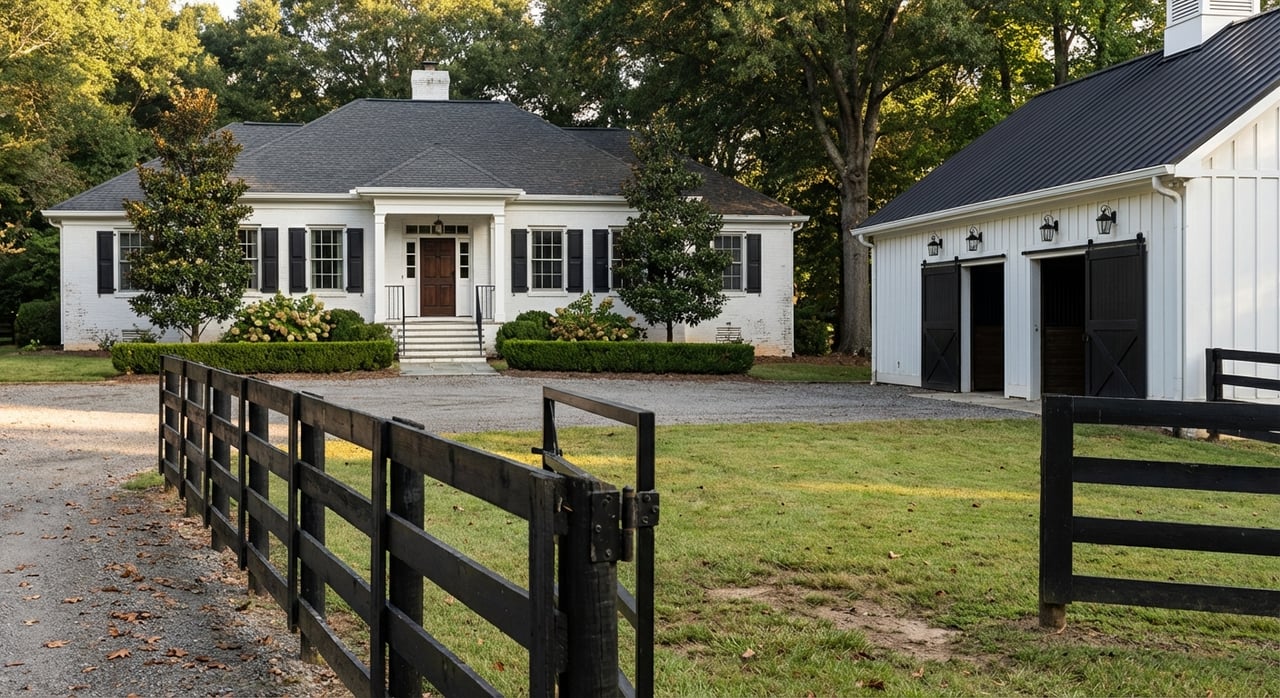
Picture waking up to dew on the paddocks and the quiet rhythm of horse country, all within minutes of North Atlanta conveniences. If you are drawn to acreage, barns, and room to breathe, Milton offers a rare blend of rural character and modern access. In this guide, you will learn how equestrian estates work in Milton, what property types and features to expect, the approvals to verify, and how to ease into the lifestyle. Let’s dive in.
What equestrian living means in Milton
Milton is widely known as metro Atlanta’s horse country, and you will see horses and barnscapes woven throughout the city rather than in a single district. The city supports this identity with an active Equestrian Committee and resources for residents. You can explore the city’s equestrian overview to get a feel for the community and programs on the official equestrian community page.
In everyday terms, equestrian living here can mean anything from a small hobby farm with a few well‑planned paddocks to a professional training facility. Barns, arenas, and turnout are common, yet the exact setup varies by parcel, discipline, and owner goals.
Property types and features
Milton’s equestrian and estate parcels span a wide range. Buyers often encounter hobby‑farm lots with a few acres, mid‑scale estates of roughly 8 to 18 acres, and larger facilities that exceed 30 or even 40 acres. Inventory changes seasonally, but this gives you a realistic sense of scale.
Common improvements you might see include:
- 3 to 30+ stall barns with wash racks, tack rooms, and often a groom or guest apartment
- Outdoor arenas, and in some cases covered arenas with dedicated footing
- Multiple paddocks and turnout pastures with four‑board, pipe, or electric fencing
- Run‑in sheds, hay and bedding storage, service drives, and trailer parking
Thoughtful pasture layout, drainage, and safe fencing are more than nice‑to‑haves. They affect horse health, daily routines, insurance and liability, and long‑term maintenance.
Rules, permits, and approvals to verify
Before you tour properties, get familiar with Milton’s Unified Development Code. The UDC consolidates zoning and land‑use standards, including permitted uses, setbacks, and the process for special approvals. You can review the framework on the city’s Unified Development Code page.
For parcel‑specific answers, Milton’s Community Development and Zoning Division is your first call. Ask about a Zoning Certification Letter to confirm whether horses, barns, and any intended commercial uses are allowed on a given property. You can find contacts and application routes on the zoning division page.
If you plan to run public lessons, shows, or outside boarding, additional steps may apply. The city maintains a process for listing and licensing riding facilities, and some operations may require use permits and business licensing. Start with the city’s riding facilities information and connect with the Equestrian Committee early.
Also remember that private covenants and HOA rules can limit horses even when zoning allows them. Always review recorded deed restrictions and HOA documents during due diligence.
Water, septic, and utilities
Many estate parcels in Milton rely on private wells and on‑site sewage systems. Treat septic and well status as major due‑diligence items. Georgia and Fulton County have specific design, siting, and inspection standards for on‑site sewage systems. The county’s manual outlines the requirements you will encounter during permitting and inspections; review the Onsite Sewage Management Systems Manual before you get too far.
Whether a parcel can access public sewer or must remain on septic is a zoning and utilities question the city can help you verify. Use the zoning office to confirm service availability and any conditions tied to development approvals.
Where to ride and board nearby
You do not have to own acreage to join Milton’s equestrian scene. The city keeps a public effort to identify licensed facilities, which is a practical place to start for lessons, short‑term boarding, or training. Explore the city’s riding facilities listing to see options.
Competitive and recreational riders often use Wills Park in nearby Alpharetta, a well‑known regional venue that hosts GHJA and other shows. Check the current calendar on the Wills Park horse show page to understand the local circuit.
Private facilities in the Milton area also offer lesson programs and varying boarding levels. For example, you can review programs and amenities at Millstone Stables or take a look at the facility overview at Windsor Stables. Each barn has its own training focus and service model, so align your choice with your discipline and goals.
Trail access is a frequent wish‑list item. Milton’s Trails Advisory Committee stewards local trail planning, including multi‑use connections and preservation of rural corridors where appropriate. If trails are important to you, study the city’s Trails Advisory Committee page and ask about current and future links near any property you consider.
True costs and daily realities
Owning an equestrian estate means planning for recurring operating costs that scale quickly with the number of horses and your care model. Typical categories include hay and feed, pasture management, veterinary care and vaccinations, farrier services, bedding, utilities for barns, manure handling, and insurance. Local trainers and boarding stables are often the best source for up‑to‑date rates and realistic budgeting in North Fulton.
Time is another cost. Decide early whether you want hands‑on daily care or prefer to board or bring in training support. Your ideal setup might be a small home barn for turnout with regular lessons at a nearby facility, or a full training operation if you plan to run a program.
Buyer checklist for Milton horse property
Use this quick checklist as you move from dreaming to due diligence:
-
Zoning and use verification
- Request a Zoning Certification Letter from Milton’s Community Development office to confirm horses, barns, arenas, and any commercial use on the specific parcel. Start on the city’s zoning page.
- Request a Zoning Certification Letter from Milton’s Community Development office to confirm horses, barns, arenas, and any commercial use on the specific parcel. Start on the city’s zoning page.
-
Covenants and HOAs
- Obtain and read recorded deed restrictions and HOA rules. Private covenants can be more restrictive than city code.
- Obtain and read recorded deed restrictions and HOA rules. Private covenants can be more restrictive than city code.
-
Septic and well
- Ask for septic design and permit documents, pumping and inspection history, and schedule current inspections. Review Fulton County’s onsite sewage manual to understand standards.
- Ask for septic design and permit documents, pumping and inspection history, and schedule current inspections. Review Fulton County’s onsite sewage manual to understand standards.
-
Barn and site inspection
- Hire an equine‑experienced inspector to evaluate fencing, paddock layout and drainage, arena footing, water access, ventilation, and fly control.
- Hire an equine‑experienced inspector to evaluate fencing, paddock layout and drainage, arena footing, water access, ventilation, and fly control.
-
Usable acres and manure plan
- Confirm how many acres are truly usable after accounting for slope, buffers, and wetlands. Map out rotation and manure storage or removal.
- Confirm how many acres are truly usable after accounting for slope, buffers, and wetlands. Map out rotation and manure storage or removal.
-
Access and services
- Check road access for hay deliveries, trailer turning radii, and seasonal conditions. Confirm proximity to veterinarians, farriers, and large‑animal clinics.
- Check road access for hay deliveries, trailer turning radii, and seasonal conditions. Confirm proximity to veterinarians, farriers, and large‑animal clinics.
-
Insurance and lending
- Ask about property and liability coverage, and consult lenders experienced with hobby farms or estate properties.
- Ask about property and liability coverage, and consult lenders experienced with hobby farms or estate properties.
-
Lifestyle fit
- Consider proximity to town centers like Crabapple and Alpharetta, commute needs, and how often you plan to show or trailer out to venues like Wills Park.
- Consider proximity to town centers like Crabapple and Alpharetta, commute needs, and how often you plan to show or trailer out to venues like Wills Park.
Is the lifestyle right for you?
If you love the idea of acreage, the cadence of barn life, and a close‑knit equestrian community, Milton offers a compelling setting. The key is to clarify your goals, verify the rules for your specific parcel, and plan for the daily and seasonal realities of horse care. With thoughtful due diligence, you can match your vision to the right property and avoid surprises.
When you are ready to explore properties or want a confidential sounding board, our team can guide you through zoning checks, inspections, and a seamless transaction experience. For a private conversation about your plans, connect with Peachtree Town & Country, LLC.
FAQs
What makes Milton, GA a strong choice for horse properties?
- Milton blends a recognized horse‑country identity, an active city Equestrian Committee, and proximity to North Atlanta services, which supports both hobby and professional equestrian lifestyles. See the city’s equestrian community resources for context.
How do I confirm if horses are allowed on a specific parcel in Milton?
- Request a Zoning Certification Letter from the city’s Community Development and Zoning Division to verify permitted uses, setbacks, and any conditions for that property. Start on the zoning page.
If I want to run lessons or boarding, what permits might I need?
- Public or commercial operations can require additional approvals and listing or licensing with the city. Review the city’s riding facilities information and contact the Equestrian Committee early in your planning.
Are most Milton equestrian estates on public sewer or septic systems?
- Many large‑acreage parcels rely on private wells and on‑site sewage systems. Confirm utility service for each property and follow Fulton County’s onsite sewage standards during due diligence.
Where can I ride or show if I do not own an arena yet?
-
Start with licensed local barns listed by the city for lessons or boarding, and consider regional venues like Wills Park in Alpharetta for shows. Browse current dates on the Wills Park horse show page.